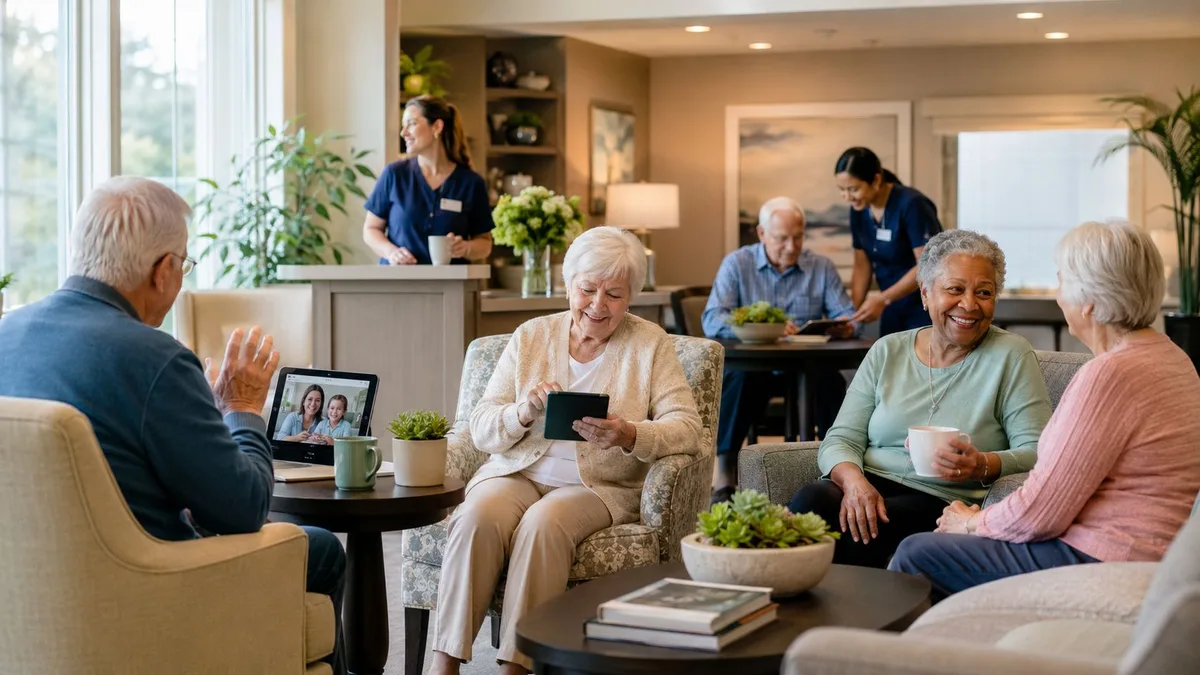
Truly Understanding the Role of "Care" in the Real Estate World of Senior Living
Many tech companies take a "if we build it — the next great widget or software everyone needs and will surely buy! — they will come" approach to providing solutions for senior living organizations. This simply doesn't work.
I've seen so many entrepreneurs come and go in the senior living space. Young and old, one of the key points missing is that senior living organizations — particularly operators working for real estate owners, and especially those working under large REITs — are first and foremost real estate businesses, not care institutions.
That distinction isn't a cynical one. Operators in this space genuinely care about the people they serve. But the business constraints that govern their every decision are fundamentally driven by property economics, not clinical outcomes. Until you internalize that, you'll keep building products that no one buys.
The Real Estate Reality
Senior housing is one of the most operationally complex real estate asset classes in existence. A significant share of senior living communities across the U.S. are owned, directly or indirectly, by publicly traded Real Estate Investment Trusts — Welltower, Ventas, and Healthpeak among the largest. These entities have fiduciary obligations to shareholders that supersede nearly everything else. Quarterly performance metrics get reported. Rent gets paid first.
The operators who run these communities — often under RIDEA or triple-net lease structures — are caught in a permanent squeeze between the financial expectations of their REIT landlords and the grinding operational realities of a 24/7 care environment staffed by a chronically depleted workforce.
"Often, the best intentioned of operators are still concerned about their rent payment to their REIT bosses on the one hand, and concerned about the 100% industry attrition rate they're facing with their staff on the other hand. Yes, care is an absolutely critical core goal, but there's also legal compliance, contractual obligations to their REITs, security considerations, normal day-to-day challenges, and finally, census considerations."
The Real Priority Stack
To understand why senior living technology adoption moves so slowly, you need to walk in an operator's shoes — and do it honestly. Here is the sequence in which priorities actually get addressed:
- Financial and contractual obligations. Meeting REIT rent, managing operating margins against rising costs, and hitting reporting metrics. This is non-negotiable and all-consuming.
- Personnel and workforce. The senior living industry experiences annual staff turnover rates that routinely exceed 100% in direct care roles. The American Health Care Association (AHCA/NCAL) has reported turnover rates for nursing assistants in long-term care consistently above 50–75% annually, with some assisted living segments seeing full-cycle churn every 8–10 months.[1] HR, recruiting, onboarding, and re-training consume enormous bandwidth — and never stop.
- Census and occupancy. An empty bed doesn't just represent lost revenue — it can represent an inability to meet fixed-cost obligations to the REIT. Maintaining occupancy above the cash-flow breakeven threshold (typically around 85%) is a constant, urgent concern, particularly in a post-pandemic environment where stabilization has been slower than expected in many markets.[2]
- Strategic technology and innovation. After all of the above — if there is time, budget, and management bandwidth left — an operator can begin to think innovatively. Most of the time, there isn't.
That's the honest reality. And it explains why an operator who genuinely believes in your product still doesn't sign the contract.
What 100%+ Turnover Really Means for Technology
The workforce crisis in senior living isn't a headline — it's a permanent structural condition. Workforce data from the National Investment Center for Seniors Housing & Care (NIC) and annual surveys by Argentum consistently document direct-care worker turnover of 50% to over 100% annually across assisted living, memory care, and skilled nursing.[3]
For technology vendors, this has a brutal implication: any solution that requires meaningful staff training is, in effect, being re-deployed from scratch multiple times every year. Platforms with complex onboarding, multi-step configuration, or deep integration dependencies face a Sisyphean problem. Even if you train every employee today, you're training a completely different workforce by this time next year.
This isn't a reason to give up on technology in senior living. It's a precise specification for what technology in this space must look like.
The Only Solution: Radical Simplicity
The answer isn't a better feature set. It isn't deeper EHR integration or a more sophisticated care coordination algorithm. The solution — the only solution that actually gets adopted at scale — is simplicity of value proposition, of the solution itself, its installation, its usage, and its management.
That means designing for:
- ✓ Residents and families who need zero training. If a senior resident can't use it without being taught, it won't be used. Full stop.
- ✓ Staff who also need zero training — given that the person you trained last month may not be there next month.
- ✓ Zero-friction deployment. Solutions that work on hardware already in the room, with interfaces people already understand, requiring no new IT infrastructure or ongoing IT support.
- ✓ Demonstrable value the operator can communicate upward. Whether to REIT bosses, to families touring the community, or to prospects considering a move-in — the value needs to be visible, immediate, and easy to articulate.
Research from LeadingAge and CAST (Center for Aging Services Technologies) reinforces this: technology adoption in senior living is highest when solutions require the fewest workflow changes and integrate with the existing physical environment — particularly the resident's room.[4]
The Independa Approach
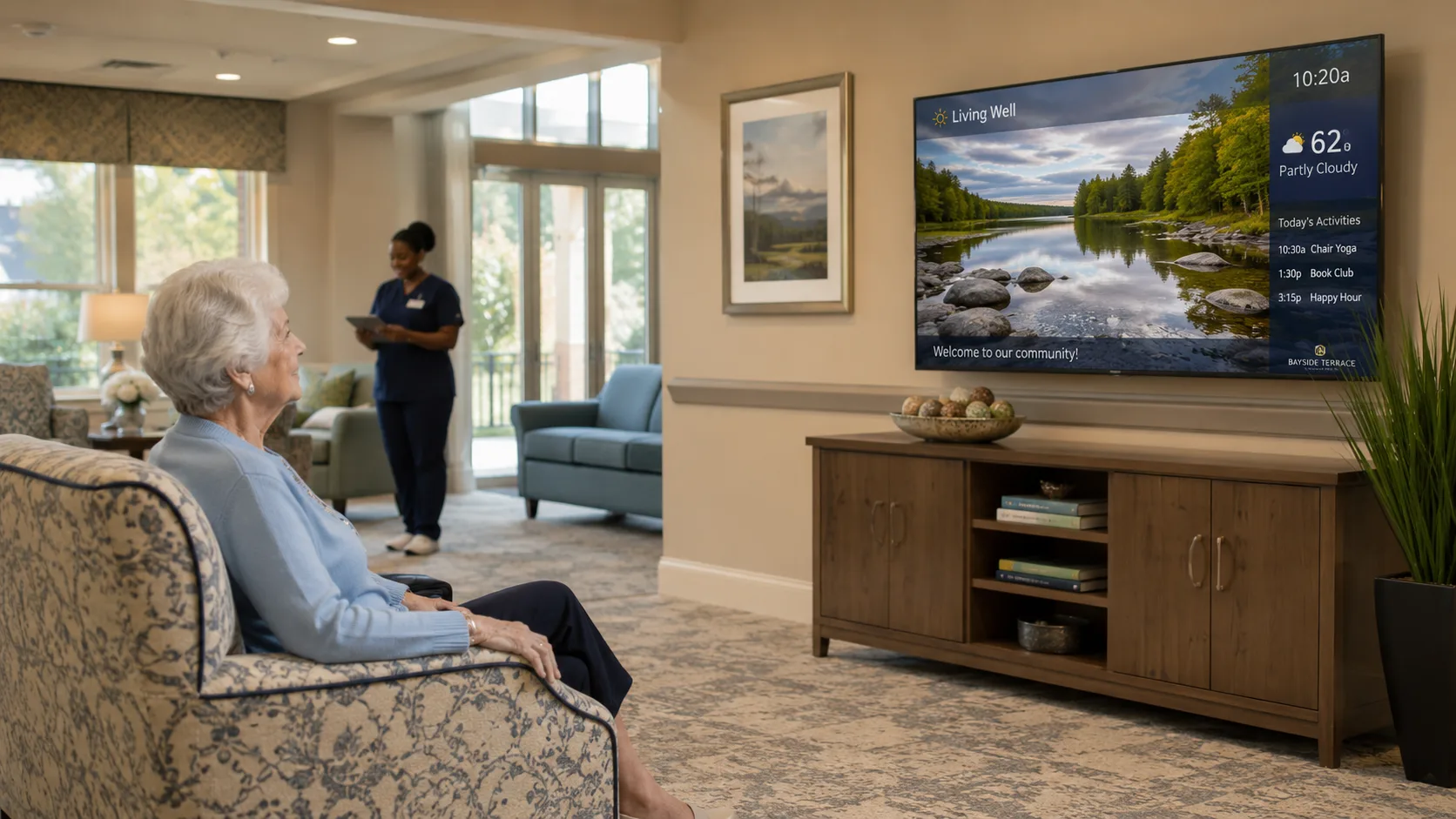
This is the philosophy behind Independa Health Hub®. Rather than asking seniors to learn a new device, or asking operators to install and manage new hardware, Independa runs on the television — the screen that seniors already know, already spend hours in front of, and already trust.
No new hardware purchases. No resident training curriculum. No password resets. No IT tickets. Just features that genuinely matter — video calls with family, telehealth access, medication reminders, social engagement, wellness content — delivered through a familiar interface on a familiar screen.
For operators, that means census-supporting value without adding a single hour to the management burden that already fills their entire week. It means something they can show a family during a tour, or a REIT owner during a review. It means technology that finally fits into their world, rather than demanding their world reshape itself to fit the technology.
The senior living space doesn't lack for smart, well-intentioned technology entrepreneurs. What it lacks is entrepreneurs who've taken the time to truly understand that before any operator can be strategic about care and wellness technology, they need to make rent, keep their staff, and keep their beds filled. Start there. Design for that reality. The rest follows.
References
[1] American Health Care Association / National Center for Assisted Living (AHCA/NCAL). 2023 Workforce Survey. Washington, D.C.: AHCA/NCAL, 2023. ahcancal.org
[2] National Investment Center for Seniors Housing & Care (NIC). NIC MAP Vision: Senior Housing Occupancy Trends, Q4 2024. Annapolis, MD: NIC, 2025. nic.org
[3] Argentum. 2023 Workforce Solutions Report: Addressing the Senior Living Staffing Crisis. Arlington, VA: Argentum, 2023. argentum.org
[4] LeadingAge Center for Aging Services Technologies (CAST). Technology Adoption in Senior Living: Barriers, Drivers, and Best Practices. Washington, D.C.: LeadingAge, 2022. leadingage.org/cast